A famous name on a diploma does not guarantee insight or originality. Prestige and talent are not the same thing; brilliance does not automatically come packaged with virtue.
Enormous charitable gifts can coexist with questionable motives. If the twenty-first century is to meet its greatest tests, education must be reimagined—so it loosens the grip of stereotype and prepares people to act with wisdom.
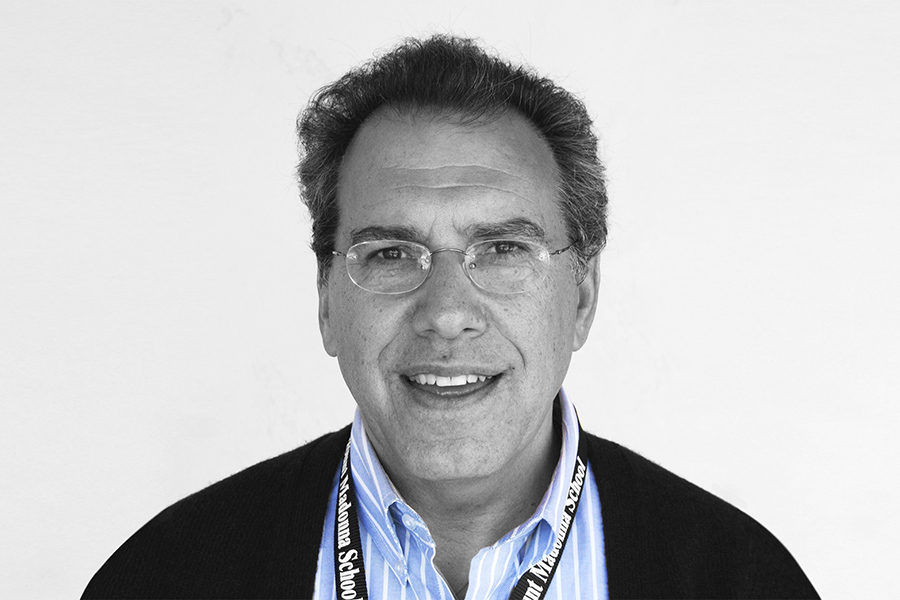
These themes—and many others—run through my conversation with Ralph Wolff, founder and president of the Quality Assurance Commons, longtime accreditation leader, Trustee of the World Academy of Art and Science, and international advisor on educational quality.
Wolff’s path began in law. A Tufts University honors graduate in history, he later earned his J.D. at George Washington University’s National Law Center and, in 1976, joined the University of Dayton as a law professor. He is admitted to the Washington State Bar and helped launch the Antioch School of Law (now the UDC David A. Clarke School of Law), the first of its kind to train lawyers for public-interest practice serving underserved communities.
Over decades, Wolff’s work shifted toward transforming education itself. He has served with the International Quality Assurance Agency for Higher Education (Dubai), the Lumina Foundation, and the advisory board of the National Institute for Learning Outcomes Assessment (U.S.). He sits on the boards of Africa International University (Kenya) and Palo Alto University. From 1996 to August 2013, he led the WASC Senior College and University Commission (WSCUC) as president and previously served as dean of Antioch University’s Graduate School of Education. In 2008, he received the Virginia B. Smith Award for innovative contributions to educational quality. He has co-authored books on pedagogy and written widely on accreditation, quality assurance, distance learning, and the civic role of libraries.
Education must not be a luxury for the affluent
“My journey wasn’t linear,” Wolff reflects. “Mentors shaped me at turning points.” After Tufts, he still felt unmoored and continued on to law school, where a professor running a legal-aid organization changed his outlook. “It opened my eyes: education should be built to serve more than the elite.” When he entered accreditation work, he saw a chance to push universities toward innovation and access.
Spiritual growth through relationships
Wolff’s inner life has long guided his outer work. He studied Transcendental Meditation with Maharishi Mahesh Yogi and has engaged seriously with Christian, Jewish, Buddhist, and Hindu traditions. “In my professional life,” he says, “I try to meet people at a deeper level.” Some choose retreat in spiritual communities; others build families and careers in the world. “For me, the richest spiritual learning has come through relationships. It isn’t the easiest path, but it is the most authentic for me.”
The unseen—and an inner discipline
Wolff believes human flourishing begins with recognizing that reality is more than what our senses register. “The unmanifest can be more powerful than the visible,” he says. People who grasp this—and live by it—exercise a different kind of influence. With climate change, rising authoritarianism, and other crises, he cultivates an inner practice to remain hopeful and oriented toward the good.
Talent grows from will and curiosity—not pedigree
Drawing on Carol Dweck’s Mindset, Wolff emphasizes that the “growth mindset” outperforms a “fixed” one. “Students at elite institutions can fall into the trap of thinking the name of their school makes them superior,” he notes. “But curiosity, persistence, and personal drive—not prestige—fuel real development. Admission to Harvard doesn’t confer originality.” His egalitarian view: learning never stops, and youthful accolades don’t guarantee lifelong integrity or contribution.
Breaking the spell of status
“Some of the most insightful people I’ve met never went to university,” Wolff says. Yet society still confers automatic respect on elite credentials or great wealth. He urges a reset: philanthropic scale doesn’t necessarily signal exemplary values, and celebrated innovators can be ethically inconsistent. (He offers examples to illustrate the point.) What matters is a new mental habit—remaining transformable at any stage of life.
A family lesson in growth
Wolff recalls a young entrepreneur whose father asked daily at dinner: “What idea arrived today? Is it big enough? Can you scale it?”—a household ritual that normalized growth. Wolff’s own father fled Germany in 1936 as antisemitism intensified. Without a college degree and wary of self-promotion, he still carved out success in a new country through resolve and steady purpose—another living model of the growth mindset.
Building environments where people can develop
Not everyone starts with the confidence to take a first step. “Mentoring and supportive communities matter,” Wolff says. He points to U.S. organizations that help high-school students discover purpose. Formal education is one tool among many, and inspired teachers often spearhead change—until the system pressures them to conform. “You can begin with great zeal, but after years of being told your approach is wrong, sustaining that zeal is hard. We must protect and reward creative educators.”
Learning as a generative process
Because knowledge of ourselves and the world evolves so quickly, Wolff argues for a “generative” model of learning. Textbooks can be outdated the day they arrive. The pandemic made this visible: guidance on vaccines and masks shifted as evidence changed. Tools evolve just as fast—from slide rules to calculators to smartphones—so “frozen” curricula age rapidly. Learners must be trained to unlearn and relearn continuously.
Teach values alongside knowledge
Technical mastery alone does not ensure ethical judgment. A scientist exploring nuclear energy, Wolff warns, must also weigh societal impact—or we risk repeating the errors that birthed the atomic bomb. Likewise, professional excellence can coexist with abusive behavior if values are never taught. Education should form people who ask: Who benefits from my work? Does it serve the many—or a privileged few at others’ expense?
A renewed vision for education
Values are the lodestar; ethics is their application. While many derive values from religion, no tradition holds a monopoly on truth. Mature education, Wolff says, raises learners to a higher plane of shared human concerns—climate change, nuclear risk, extinction, war, poverty—and, at the same time, fosters respect for others’ value frameworks. The mission of tomorrow’s schools must therefore be twofold: cultivate universal values and teach the civic art of honoring difference.