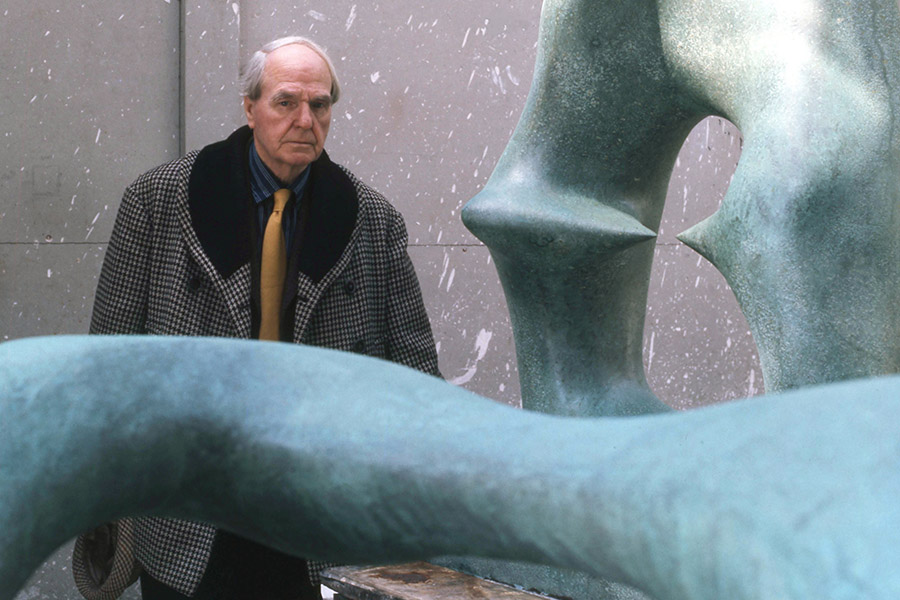
Henry Moore, one of the most influential sculptors of the 20th century and a Fellow of the World Academy of Art and Science, was renowned for transforming the human form into monumental works that seemed to breathe with the rhythms of nature.
Born in 1898 in Castleford, a small mining town in Yorkshire, England, Moore’s upbringing was modest but intellectually rich. His father, a coal miner, valued education deeply, and despite their limited means, he encouraged Moore’s artistic ambitions. After serving in World War I, Moore pursued his studies at the Leeds School of Art and later at the Royal College of Art in London. From these beginnings, he went on to reshape modern sculpture.
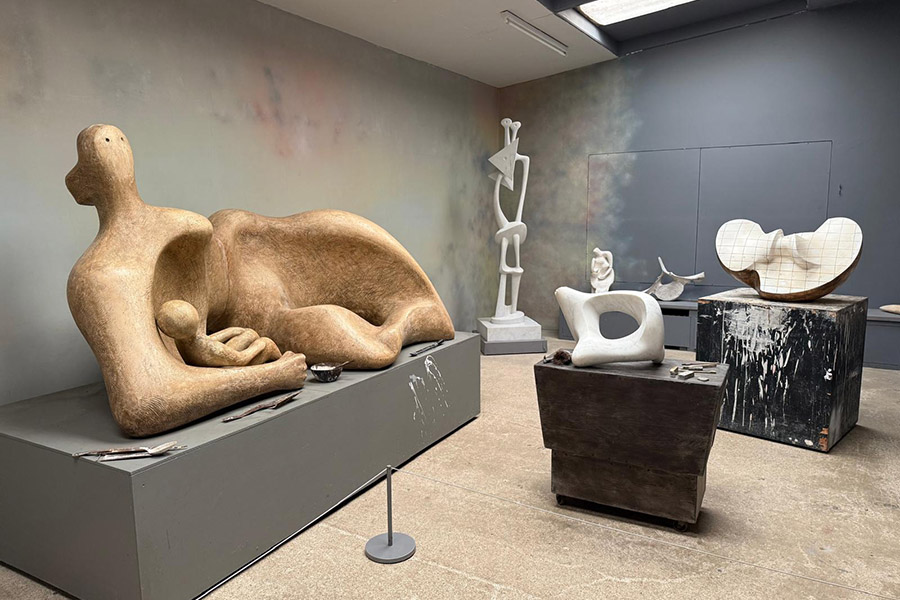
Moore became best known for his semi-abstract monumental bronze sculptures, often depicting reclining figures or mother-and-child themes. These works, with their organic shapes, voids, and hollows, reflected Moore’s conviction that sculpture should be an extension of the natural landscape. He once remarked, “Art is the expression of man’s pleasure in nature and his own being.” This perspective guided not only his choice of subject but also his methods, as he frequently drew inspiration from stones, bones, shells, and natural forms he collected on his walks.
Central to Moore’s worldview was a belief in the universality of human experience. His works, while rooted in personal and cultural references, transcended specific contexts. They resonated across societies because they addressed fundamental themes of humanity: birth, protection, vulnerability, endurance. In the aftermath of World War II, his images of sheltering figures — derived from sketches of Londoners huddled in bomb shelters during the Blitz — captured the collective fragility and resilience of people everywhere. These works underscored Moore’s conviction that art could serve as a bridge between cultures, expressing both suffering and hope in ways that words often could not.
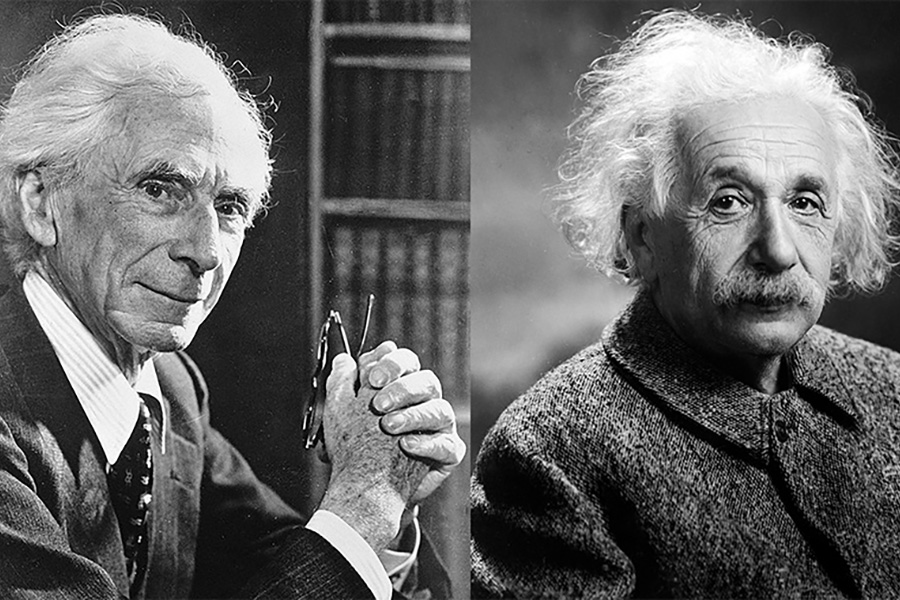
It is in this universalist spirit that Moore’s association with the World Academy of Art and Science (WAAS) becomes especially meaningful. As a Fellow of the Academy, Moore joined an international network of thinkers, scientists, artists, and leaders dedicated to addressing global challenges through creativity and collaboration. WAAS was founded in 1960 by eminent figures like Albert Einstein and Bertrand Russell, who believed that humanity’s most urgent problems — nuclear proliferation, poverty, environmental destruction — required not only scientific expertise but also cultural and ethical insight. Moore’s inclusion reflected recognition that art, no less than science, shapes how humanity imagines its future.
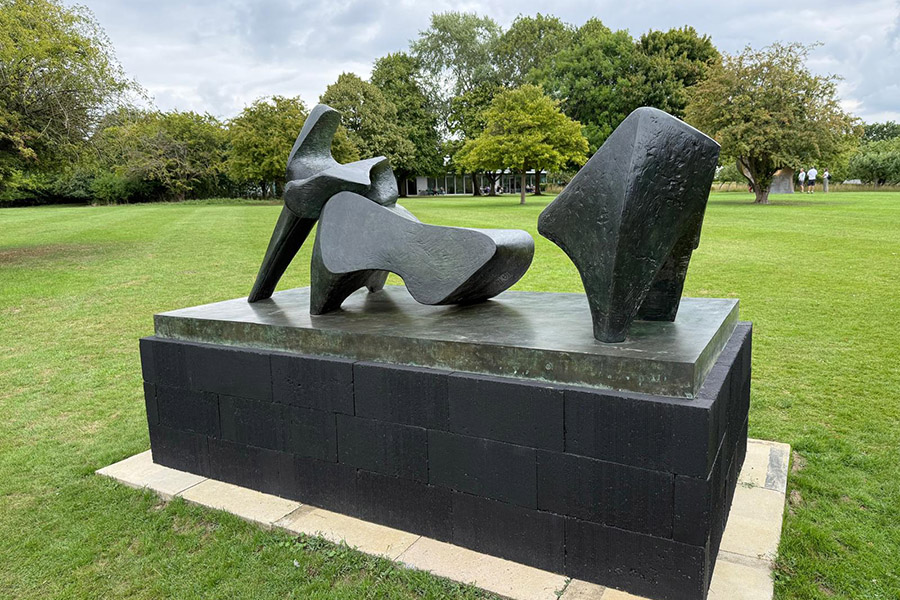
While Moore did not write extensively about politics or global governance, it is reasonable to speculate that his art carried a quiet but potent form of advocacy aligned with the Academy’s mission. His exploration of universal human forms can be seen as an artistic parallel to the Academy’s search for universal solutions. Just as WAAS sought to bridge divides between disciplines and nations, Moore’s sculptures created spaces where people of all backgrounds could contemplate shared human truths. His preference for open, accessible public art — placing works in parks, plazas, and universities — mirrored the Academy’s commitment to democratizing knowledge and dialogue.
It is also plausible that Moore, having lived through two world wars, felt an affinity with WAAS’s efforts to prevent future global catastrophe. The Academy’s founding ethos emphasized the responsibility of intellectuals and creators to guide humanity toward peace and sustainability. Moore’s recurring themes of shelter, nurture, and continuity resonate with this responsibility. His mother-and-child figures, for example, can be read as meditations on the survival of future generations — a concern that echoed the Academy’s focus on safeguarding humanity’s long-term well-being.
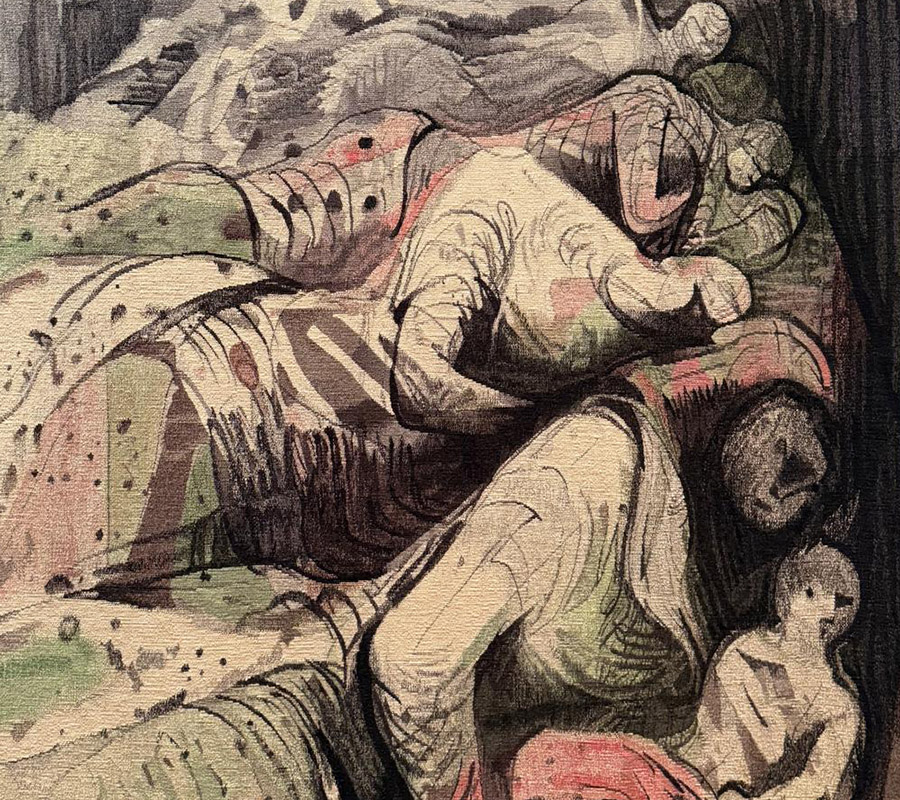
Henry Moore’s art was not only about form and space but also about values — endurance, compassion, and interconnectedness. His association with the World Academy of Art and Science underscored the recognition that art plays a vital role in shaping the moral imagination of society. He believed that sculpture should “stand free in the open air, born out of the earth,” and in many ways his involvement with WAAS suggests he also believed ideas should stand free, shared globally for the benefit of all.
Through his monumental works and his quiet participation in an international academy of thinkers, Moore exemplified how art and science together can offer humanity both vision and grounding. His legacy reminds us that the shaping of stone and the shaping of civilization are, in the deepest sense, part of the same human endeavor.