

Existential
Threats and Risks
to All

EXTRA is a one-stop info hub for decision-makers who need to understand the most pressing issues confronting humanity today. A multidisciplinary working group within the World Academy of Arts and Science, we curate materials from leading organisations across the globe to create an up-to-date, concise and comprehensive overview of major existential threats and risks, thus enabling the strategic foresight needed to create pathways towards human security and wellbeing for all.
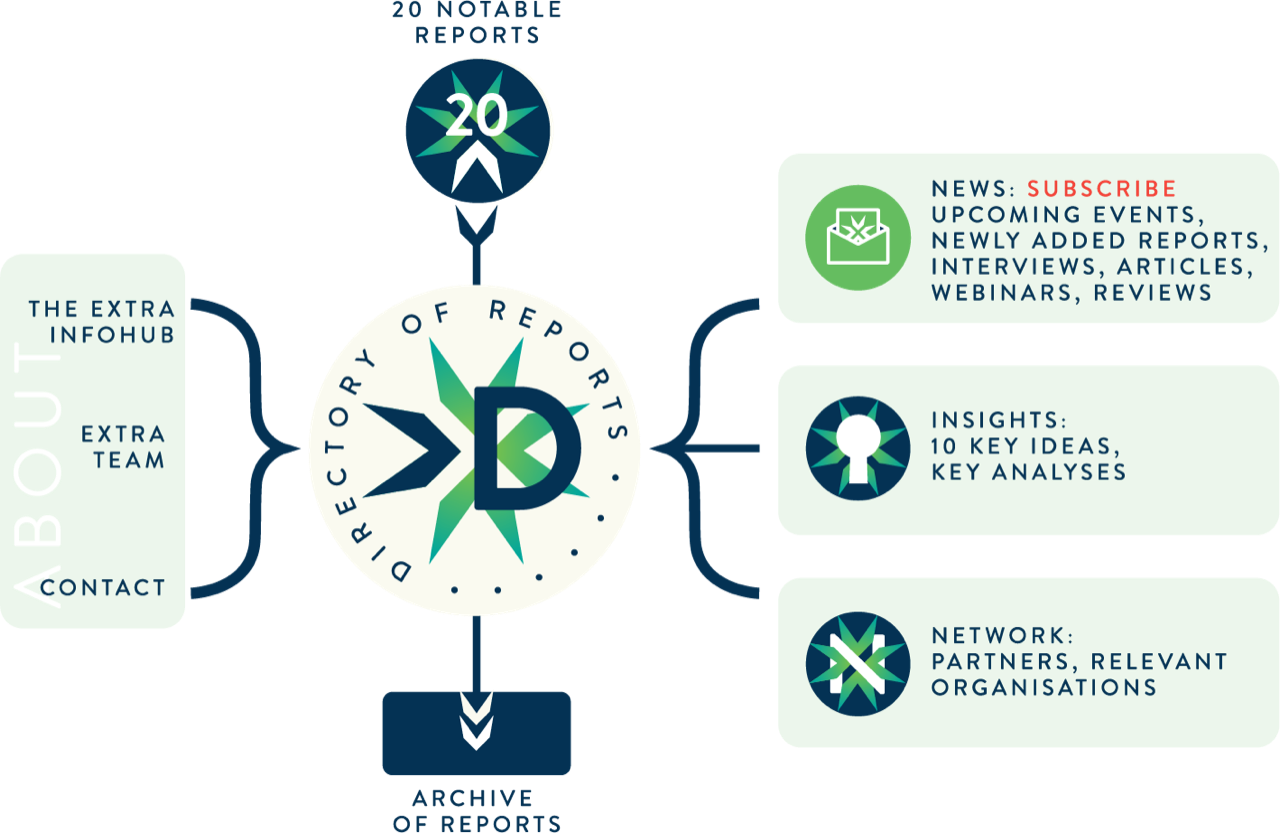
There is a wide array and quantity of information available in books, articles, and especially reports on current threats and risks and how to promote human security for all. To overcome this fragmentation and information overload, the EXTRA InfoHub provides short abstracts and links to relevant reports by UN agencies and NGOs, as well as some important books and articles. This carefully curated selection is made available in a Directory with several hundred entries. The Directory is complemented by a summary of 10 Key Ideas and 20 Notable Reports, a listing of more than 80 Relevant Organisations, and occasional Key Analyses on pressing existential concerns. A regular eNewsletter presents new additions to the Directory, short articles, interviews, reviews, new key analyses (e.g., on AI, food, and water), and news on events held by EXTRA, WAAS, and our partners.

World Conference on Science and Art for Sustainability
This conference will be the second conference within the Earth-Humanity Coalition—World Academy of Art and Science (EHC-WAAS) Program and a flagship event within the International Decade of Sciences for Sustainable Development (IDSSD). The conference aims to listen to prominent individuals from various science and art disciplines, induce fruitful interactions among them, and gather conclusions on sustainable, secure, and peaceful development. This will be presented to multiple policy-makers and science and art stakeholders at the local, national, and global levels.
More information.
EXTRA Subscribe to our e-Newsletter. Stay up-to-date with reviews of the latest reports, original material, and important news items from the global press and NGOs.
The Directory is clustered under the five main headings of Overviews, Planet, People, Security, and Sustainability, somewhat similar to the SDG clusters. There are also materials that seek to provide an introduction to existential risks.
The purpose of the Directory is to promote serious transdisciplinary “horizontal” thinking, encompassing diverse and sometimes conflicting views, in contrast to the “vertical” thinking of analysis in great detail, to be found in academic journals and some reports. By doing so, we hope to provide a better synthesis of major emerging global problems and promising solutions, proposed or underway, and promote collaboration on foresight and priority actions.
The “Directory of Reports” on Existential Threats and Risks largely includes stand-alone PDFs of reports available for free, but also selected recent books and articles in journals and other publications that may not be available for free.
Items are arranged in conceptual clusters with the primary intention to enable quick identification of related items, while noting that some subcategories quite obviously cut across these conceptual clusters. The clusters or sub-categories are arranged in a roughly logical progression. Arrangement of content within subcategories is generally by placing the most recent and important items first.
OVERVIEWS
Risk Histories | Risk Overviews | Polycrisis | Sustainable Development Goals | Human Security for All | Other Normative Overviews
PLANET
Climate Outlooks | Climate Remedies | Tipping Points | Planetary Boundaries | Energy Transition | Biodiversity | Arctic Warming | Forests | Oceans | Water | Pollution | Waste | Global Commons | Natural Disasters
PEOPLE
Population | Inequality | Poverty Reduction | Migration | Cities | Food and Agriculture | Health and Pandemics | Education and Learning
SECURITY
Nuclear Weapons/Disasters | Biological Warfare | Non-Nuclear Wars | AI-enabled Warfare | Artificial General Intelligence/Superintelligence | Terrorism | Organized Crime | Wild Cards | Peace Agendas
SUSTAINABILITY
21st Century Economics | 21st Century Infrastructure | Circular Economy | New Finance | Democratic Governance | Artificial Intelligence Guardrails | Other New Technology | Methods and Planning

Responses to existential challenges derive from many disciplines. They present varying concerns, employ different definitions, and diverse outlooks that are constantly changing in this rapidly evolving field. We propose 10 Key Ideas about existential threats and risks to help navigate the available resources.

Concern with threats and risks (heretofore X-risks) is not new, but it is clearly growing in all major categories: nuclear war, climate change, pollution, health, AI, etc., due to four recent global shocks: the COVID-19 pandemic, Russia’s invasion of Ukraine, the Israel-Hamas war, and re-election of Donald Trump as US President. To cite three very different sources: the “Doomsday Clock” of The Bulletin of the Atomic Scientists (Jan 2025) is now at 89 seconds to midnight—the closest it has ever been. The annual Global Risks Report of the World Economic Forum in Davos ranks 32 risks in the next two years and ten years, and warns of “a deteriorating global outlook.” The Annual Threat Assessment of the US Intelligence Community (Feb 2024) sees “an increasingly fragile global order.” Trump 2.0 portends backward steps in many areas.

Nuclear war has been at the head of many lists since weapons were detonated over Japan in 1945. Risks are growing with more nuclear nations, more powerful weapons and means of delivery, and increasing tensions between nations. However, climate change is now the more obvious “elephant in the room,” due to the increasing frequency of heatwaves, storms, floods, droughts, and wildfires in recent years, with 2024 being the warmest year on record. Artificial intelligence, which emerged in 2022 for better and for worse, could potentially be the largest elephant in the room in only a few years, as big US technology firms and several nations (notably China) are investing hundreds of billions of dollars in a race to develop Artificial General Intelligence (AGI), where machines think for themselves. Many experts fear that AGI without sufficient guardrails will be available in a few years. There are also concerns about biotechnology enabled by AI, pandemics (notably from the mutation of H5N1 bird flu), pollution, climate tipping points, and six of the nine planetary boundaries already being surpassed.

Limiting the study of X-risks to doom or catastrophe for all of humanity ignores whose existence will be affected first. Nuclear weapons, of course, can affect everyone. But climate change has grave consequences for some countries more than others, and for women, children, poor people, outdoor workers, the disabled, indigenous people, and those living in countries that are already hot and getting hotter. In addition to spatial distinctions, young people should be far more concerned than older people, because their expected multi-decade lifespans are threatened far more than seniors with only a decade or so ahead.


“Risks” are cited far more often than “threats” (a concern of military and intelligence communities), but overlap in some reports. They are also expressed as “challenges”, “catastrophes,” “global catastrophes,” “global shocks” and “disruptions on the horizon.” Threats and risks are future-oriented, in contrast to the present-oriented “polycrisis”. All are compound concepts, in contrast to more frequent thinking on single X-risk issues such as climate, biodiversity, AI, etc.

Nuclear extinction is rapid, nearly total, and well understood. Climate impacts are scattered, varied, and not total. Many negative impacts of AI are suggested, and may be slow or fast if enabling military decisions. Climate tipping points may take decades to emerge, and their impacts could lead to local or regional extinction. A pandemic may take a year to travel worldwide and several years to subside. Natural catastrophes, such as an asteroid or a major volcanic explosion, are instant but rare. Asteroids can be anticipated, whereas the latter are generally not.

A nuclear attack or accident could happen at any time; the policy of Mutually Assured Destruction has lasted for nearly 80 years, but appears less trustworthy in the following decades. Climate change is certain, but the question is how much and how soon. Tipping points also appear certain, but also with questions of how soon. Major natural calamities (earthquakes, supervolcano eruptions, solar flares, asteroid impacts) are possible, but cannot be predicted. The sixth mass extinction of species is underway, but the number of species affected and the timing are also unclear, as are the impacts on humans.

Many different actions are being taken or could be taken, ranging from broad normative agendas, such as the UN’s Sustainable Development Goals, to specific actions aimed at mitigating climate change, adapting to it, preserving species, and ensuring adequate food and water. Unfortunately, there are headwinds: vested interests, disinformation, rising costs, denial, infoglut, lack of funding, immediate national concerns, fear of global government, and hopelessness. Adding to this fragmentation are more than 80 organizations involved with EXTRA thinking in some way.


In a world where many are already suffering from “eco-anxiety”, focus on X-risks can be depressing and subject to ignoring as “doom-mongering”. It is also about future years and decades, and thus easily dismissed as “speculative.” To offset this necessary gloom, X-risks should be paired with positive thinking about the SDGs and/or Human Security for All (HS4A), a potential complementary or successor focus to the SDG Agenda 2030, which will not be met. Emphasis should also be given to cost/benefit analysis and redirecting finance to high-priority action for reducing risks and adaptation.

Focusing on X-risks can help to promote sustainability thinking and action. There are numerous organizations and programs promoting sustainability in education, including 53 PhD programs at 40 institutions. These programs are likely to consider expanding their horizons to consider the urgency of X-risks.

Any transformation to sustainability and greater security will require learning new ideas over the next decades—with AI, or despite it—a challenge for all age groups. Youth groups, especially if allied, can press for more relevant academic programs and changing encrusted adult minds resisting 21st century realities. A monthly EXTRA Update Newsletter covering important new books, articles, and—especially–reports will be distributed to various organizations and interested individuals.

Concern with threats and risks (heretofore X-risks) is not new, but it is clearly growing in all major categories: nuclear war, climate change, pollution, health, AI, etc., due to four recent global shocks: the COVID-19 pandemic, the Russian invasion of Ukraine, the Israel-Hamas war, and (probably) the re-election of Donald Trump as US President.

